Tuesday, 21 July 2009

The Duckworth Lewis Method

I have relatively few passions in this world but when two of them come together in such a great combination it certainly adds to life's rich tapestry. I've already confessed to my penchant for The Divine Comedy in an earlier post, so imagine my delight when I heard that songwriter Neil Hannon of The Divine Comedy had just released an album inspired by my favourite sport - cricket. And just in time for the Ashes!

When I was a child I spent many an hour watching cricket - initially England getting ground into the dust by a rampant West Indian side and then as I grew older I got used to Australia consistently hammering England. Over the last couple of weeks my ear's been glued to the radio (can't afford SKY for live TV coverage)as I've kept abreast of England's heroics on their way to regaining the Ashes (I hope).

But I've listened to the streaming version of The Duckworth Lewis Method's album online and I've got to say it's great. Somehow it evokes the feeling of a lazy summer's afternoon at the cricket - a far cry I must say from the gut-wrenching agony of being an England supporter during any Ashes series. I never thought that an album on cricket would ever be written but the Divine Comedy have lived up to their name and produced a classic! There must be a God after all.

Here they are performing on Grafton Street, Dublin. Did you see them Cosmo?

Wednesday, 8 July 2009

U2>Miss Sarajevo

On the whole I've given U2 short thrift on this blog - I'm not really sure why because I've always been a big fan. I suspect it's because for the last couple of years I've found Bono's earnestness just a little too much. However, prompted today by my wife's departure for 8 days to Bosnia on an interfaith trip I checked out a song I've loved for a long time - Miss Sarajevo (The Passengers, 1995).

As I watched the video of the song - as below - it all came back to me. I remember being glued to the TV news during the war watching with grim fascination the pictures of the ordinary people of Sarajevo literally having to sprint for cover on the way to work to avoid the bullets around them. It was the weirdest of things seeing normality and war going on side by side. And U2 capture the sense of this paradox in the song magnificently (read about the song here). And as the beauty contestants hold up the sign saying 'don't let them kill us' the futility and pointlessness of it all becomes so stark.

I love the lyrics, too with their echo of Ecclesiastes. Until today I hadn't seen a translation of Pavarotti's part. Here it is:

You say that the river
finds the way to the sea
and like the river
you will come to me
beyond the borders
and the dry lands
You say that like a river
like a river...
the love will come
the love...
And i don't know how to pray anymore
and in love i don't know how to hope anymore
and for that love i don't know how to wait anymore


Powerful stuff, eh? And so, perhaps you'd like to spare a prayer for the people of Bosnia who have with such dignity begun to rebuild their country and my own 'Miss Sarajevo' who is there today.

Tuesday, 23 June 2009

Radiohead>No Surprises

There was a time when I was convinced that Radiohead was the greatest band on earth. Now I would review that considerably - they're good, but short of a truly inspired critique, I will simply state that I find them a bit depressing! However, I find very little to criticize about my favourite song of theirs - 'No Surprises' (OK Computer, 1997). It's a masterpiece.

Let me tell you why this song is so great! Firstly, it's got one of the most sublime guitar riffs in rock. Secondly, Thom Yorke's voice is so sullen and tired that it captures the mood magnificently. Thirdly and most importantly, it's a song to inspire a revolution. Some songs are written with uprising in mind and they put it all out there in clear and obvious ways - think the Clash's 'London Calling' or the Sex Pistols' 'Anarchy in the UK' for example. Having listened to and enjoyed those songs on many occasions I can safely say that by the time they reach their raucous final bars the anger and angst inside me has all but dried up. I have always preferred the subtle, however. 'No Suprises' contains three minutes and forty-eight seconds of such irony and monotony that by the end you're ready to get up and go and do something rebellious to prove Radiohead wrong - that you're ready for a life that breaks the mould and really will bring down the government.

And so perhaps I'm back to Alinsky again. Recently, I've become convinced that those who seek to follow Jesus can never be satisfied with just doing good things and at the same time maintaining the status quo. That in it's own way is like embracing a world of 'no suprises'. That's a case of cheap grace. Costly grace involves a deeper work where risk and revolution have their place - where the injustices of our communities and neighbourhoods are challenged to their core. Listen to 'No Suprises' and you'll hear what I mean but don't blame me when it stirs you up.

Saturday, 6 June 2009

Sufjan Stevens>The Perpetual Self or What Would Saul Alinsky Do?

Well, here's to the song with the longest title I'll probably ever attempt to write about! If you know anything about American singer-songwriter and player of pretty much every instrument you can imagine - Sufjan Stevens - you'll know that long song titles are one of his fortes. A lot could be said about Sufjan and his religious connections but no time for that right now - what I'm particularly interested in writing about is why I chose this song of his. Mainly it's because of the man mentioned in the ridiculously long title of this song - Saul Alinsky. And he's someone who I have recently become very interested in.

Saul Alinsky is known as the father of 'community organising'. The term was probably not that well known until this time last year when its most famous proponent started banging on about it on his way to the White House. Having got involved in community organising here in East London through London Citizens a couple of years back, I've read Alinsky's two short books - Reville for Radicals (1946) and Rules for Radicals (1971) and been gripped by them. They're not quite like anything I've ever read - irreverent, funny, passionate, political and ultimately empowering. If you want to do politics or social justice it's the only place to start. I'll never be the same again having read that stuff (and incidently, I've seen the principles work here in my neighbourhood!).

So what's this song about? Truthfully, I'm not sure - every version of the lyrics on the internet are different and none of them are obvious in meaning. Having listened to the song carefully a few times I would suggest that it appears to be an Alinsky anthem of sorts. You'll just have to listen to it yourself - strangely uplifting despite the opening salvo of 'Everything is lost...'. But then in an odd kind of way that is Alinsky's message - when you're down and losing, get organised, act together and you're on your way up. And make sure you have a lot of fun doing it!

Wednesday, 3 June 2009

Steve Earle>John Walker Blues

It feels appropriate for a post on Townes Van Zandt to be followed by one on Steve Earle given his recent TVZ covers album and general hero-worship. Also, as I write the news is on in the background and I'm being told that President Obama is currently in Saudi Arabia trying 'to reach out to the Muslim World'. Obama would do well to listen to Earle's 'John Walker Blues' (Jerusalem, 2002) as a starting point in American relations with Islam. (Actually, if my take on this song is right - he probably has!).

The song is about John Walker, an American convert to Islam, who fought with the Taliban in Afghanistan before being captured in 2001. He's currently serving a 20 year sentence in the US. Lyrics can be found here. Now I can imagine that this subject is a pretty emotive issue for lots of people - Walker is considered a traitor and his story came as a shock to many.

However, I don't think for a moment that Earle is condoning violence or fundamentalism in this song. What I think he does instead is to transfer the emotion to a different place by writing the song from Walker's point of view - a regular guy looking for meaning in life and who follows his convictions (however misguided) once he finds something that makes sense to him. I personally find the song very challenging because it cuts through so much of the hysteria surrounding Islam - it is an individual that is being sung about, not the breathtakingly overstated 'clash of civilizations' agenda. The 'blues' is not just a take on Walker's own story of being hauled back to the US as a prisoner but in America's failure to offer Walker something in the first place that touched his soul. Of course we could offer many excuses for why that may be - no doubt his family, his upbringing would be cited - but then again we in the Western world could perhaps take a hard look at ourselves and wonder why we're surprised at all.

Monday, 25 May 2009

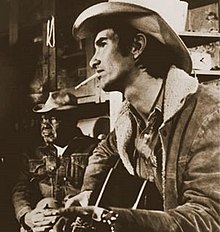
Townes Van Zandt>Waitin' Around to Die

If you're feeling slightly low or depressed please click away now! If you're in a emotionally-secure enough place to be moved - read on.

The East End of London is just the most vibrant, interesting, and sometimes challenging place to live, work and raise a family. After 6 years of being here it takes a lot to surprise me about people and the way they live - but there's always one place that just touches my soul in a way nowhere else does. Every Wednesday morning I play football with a group of men from a drop-in centre that provides breakfast for those with no permanent place to live. At 10:30 I pass by the centre to see who will play with us that day. 20m from the door the smell of cheap and nasty beer hits you in the face. A group clutchering their cans of lager crowd around the door. Once inside there are people milling about - some getting showers others drinking tea - whilst more are lying across the tables trying to sleep. The last two times I've visited one character with a hat pulled low over his face is marching up and down the room talking to himself in a loud voice. I always wonder what the stories are behind the faces - so many things, so much hardship, so much sadness.

This week, as I looked around the room trying to find someone who was either sober enough or awake enough to come and play football the opening strains of Townes Van Zandt's 'Waitin' Around to Die' played like a soundtrack in my ears. You see, I've asked myself numerous times why we do what we do - why those with chaotic lifestyles seem to choose more chaos. And the answer is in the song - it's easier than just 'waitin around to die'. If you can watch the clip below and not shed a tear like the guy in the background then you have a heart of stone!

Wednesday, 13 May 2009

Bob Dylan>This Dream of You

Now to my favourite song on Dylan's new album. If Together Through Life's opening track 'Beyond Here Lies Nothing' sounds like a denial of any form of heaven; if 'Life is Hard' takes us into Dylan's dark night of the soul; if 'Forgetful Heart' seems pretty conclusive about Dylan's state of faith with the final lines: 'The door has closed forevermore/If there ever really was a door'; - if all this is the evidence we can glean regarding Bob's current spiritual state from Together Through Life, then we can agree here is a man who has lost whatever hope he once espoused. And yet... and yet... there is one track that contradicts all of the above.

'This Dream of You' is a magnificent track - the best on the album for me. It has a very similar feel to the gorgeous 'Red River Shore' (and I have written about that one already). Take a look at the lyrics - worth a full outing here:

How long can I stay
In this nowhere cafĂ© ‘fore night turns into day
I wonder why I’m so frightened of dawn
All I have and all I know is this dream of you which keeps me living on

There’s a moment when
All old things become new again
But that moment might have come and gone
All I have and all I know is this dream of you which keeps me living on

I look away but I can see in it
I don’t want to believe but I keep believing it
Shadows dance upon the wall
Shadows that seem to know it all

Am I too blind to see
Is my heart playing tricks on me
I’m lost in the crowd, all my tears are gone
All I have and all I know is this dream of you which keeps me living on

Everything I touch seems to disappear
Everywhere I turn, you are always here
I’ll run this race until my earthly death
I’ll defend this place with my dying breath

From a chairless room
In a curtain gloom, I saw a star from heaven fall
I turned and looked again but it was gone
All I have and all I know is this dream of you which keeps me living on


Incorporated into the lyrics are several Biblical allusions - see how many you can spot!? You may have your own take on this song but here's mine for what it's worth. Bob is addressing God. For whatever reason, God is distant - a memory of sorts - but ultimately it's all he's got. And despite the distance between them, there are fleeting moments when even earthly reality pales into insignificance compared with the presence of the living God. But try and put your finger on it or pin it down and it melts away like a dream.